Why This Matters Right Now
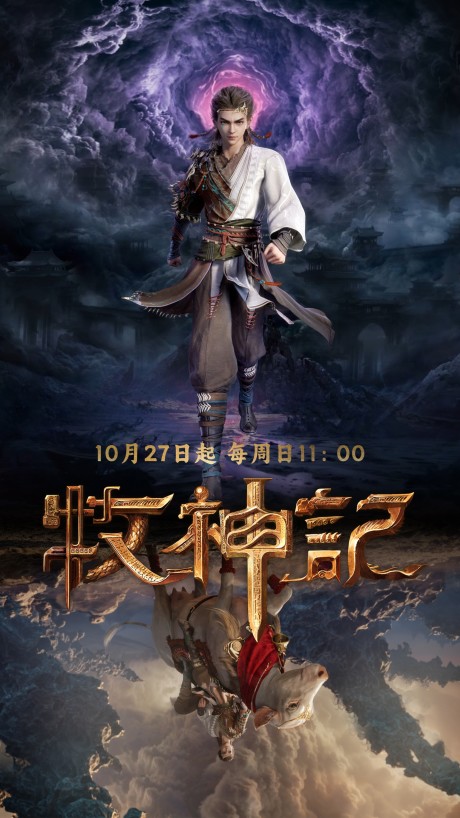
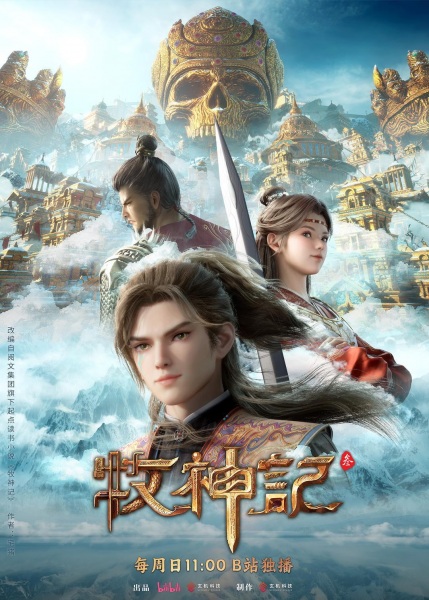
If you've been following the Tales of Herding Gods donghua — Bilibili and Sparkly Key Animation's stunning animated adaptation — this is Chinese fantasy at its most ambitious, closer to a mythological epic than a typical "anime" — you've absorbed a lot of information about the world without really understanding it. That's by design. The show respects its source material enough to let mysteries breathe, but it also means you've been getting the surface-level version of a story whose real architecture is invisible until someone points at the blueprint.
Here's what the donghua has shown you so far: Qin Mu grows up in Canlao Village, a tiny settlement in a wasteland called Da Xu. Nine crippled elders train him in martial arts. At night, nobody goes outside — because something in the darkness eats people. When Qin Mu finally ventures beyond Da Xu, he discovers a vast world of empires, gods, and martial arts schools (called "sects" in this world — think Hogwarts houses, but each one has its own army) that treat his homeland like a footnote — if they acknowledge it at all. Most people in the wider world have never heard of Da Xu. Those who have consider it a cursed patch of dirt not worth discussing.
Charming setup. Quirky found family. Classic "boy from nowhere" origin story. The kind of premise you've seen in a hundred cultivation tales. A scrappy kid, a mysterious upbringing, an unknown heritage waiting to be discovered.
Every single one of those framing details is a lie. Not a mistake — a deliberate misdirection by the author, Zhai Zhu, who buried the actual truth so deep in the novel that even attentive readers don't piece it together until the back half of a 1,500-chapter epic. The nine elders aren't randomly scattered retirees. The darkness isn't a natural phenomenon. And Da Xu itself — the entire geography — isn't a wasteland at all.
It's a folded empire. A sealed civilization. A temporal anchor point around which the entire story loops. And the key to understanding it all is a woman named Ling Tianzun.
The core revelation: Da Xu is not barren land. It is the complete territory of the Kai Huang Heavenly Court — the capital of a fallen divine empire — compressed and sealed into a tiny, desolate patch of ground by a technique called Matter Immutability. The technique locks space permanently. The seal cannot be undone. And the woman who cast it did so knowing she would never be thanked.
Layer 1: Da Xu Is a Folded Empire
Let's start with the geography, because the geography is the key that unlocks everything else.
In the world of Tales of Herding Gods, the Kai Huang Heavenly Court was the ruling power of a previous era — a divine civilization that once dominated the world. The Kai Huang Emperor commanded gods, sages, and armies. His capital was a sprawling heavenly metropolis, the seat of an empire that rivaled anything in xianxia fiction for sheer scale and ambition.
The Kai Huang Emperor lost. The war that followed — the novel calls it the War of the Heavenly Courts — shattered the empire and scattered its people. Gods died. Cities burned. And when the dust settled, the victorious new order set about erasing every trace of Kai Huang from history.
They would have succeeded. Except for one person.
Ling Tianzun and Matter Immutability
Ling Tianzun was one of the Kai Huang era's most brilliant figures — a cultivator who had achieved mastery over a technique called Matter Immutability (不易神通). The word "immutability" is doing a lot of work here. In xianxia cosmology, where qi flows, space bends, and reality is negotiable, a technique that can make something permanently fixed is less like a spell and more like a law of physics that you personally wrote.
As the Kai Huang Heavenly Court crumbled around her, Ling Tianzun made a decision that would echo through the next ten thousand years. She reached out with Matter Immutability and folded the entire Kai Huang capital — every palace, every street, every garden, the Earth Mother's Primordial Realm itself — inward upon itself, like compressing a galaxy into a matchbox.
Think of it this way: Imagine someone took the entirety of ancient Rome — the Colosseum, the Forum, the Senate, every temple and aqueduct — and compressed it into the footprint of a single small village, then locked the compression so it could never expand back. That's what Ling Tianzun did to the Kai Huang Heavenly Court. And the "small village footprint"? That's Da Xu.
The spatial compression is permanent. Immutability means immutability — the space cannot naturally restore itself. Once folded, it stays folded, a scar in the geography of the world that no god has been able to undo. The vast heavenly capital became the cramped, desolate region Qin Mu calls home. Not because it was destroyed. Because it was preserved — hidden in plain sight as a wasteland nobody would bother investigating.
This explains one of the donghua's most persistent background mysteries: the land of Da Xu feels wrong. Characters comment on it. The landscape doesn't match the surrounding regions. Nothing grows properly. There are ruins that seem impossibly old, structures that don't belong to any known civilization. The donghua shows you these details without explaining them, because the explanation would shatter the story's slow-build mystery structure.
They're not ruins of a village. They're remnants of a heavenly empire, peeking through the folds of compressed space like bones pushing through skin.
Layer 2: The Soul-Devouring Black Sand
If Layer 1 is the space secret of Da Xu, Layer 2 is the darkness secret — and it's arguably more horrifying.
The donghua establishes early that Da Xu has a rule: never go outside at night. The darkness itself is lethal. People who break the rule disappear. The show treats this as ambient worldbuilding — "dangerous wasteland is dangerous" — but the novel provides a precise, devastating explanation.
Yin Tianzi's Betrayal
Enter Yin Tianzi — the Sovereign of Yin. "Tianzi" (天子) is the classical Chinese title for emperor, literally "Son of Heaven," carrying the weight of divine rulership — not "son" in the familial sense. Yin Tianzi's rank places him among the governing divine hierarchy. The novel reveals that Yin Tianzi killed Tianyin Niangniang, the Lady of Heavenly Yin, a goddess who presided over the Tianyin Realm. Her murder was not just an assassination. It was a strategic strike.
Yin Tianzi didn't just kill her. He harvested the Soul-Devouring Black Sand of the Tianyin Realm — an entity the novel calls "殍鬼" (starving ghosts) — and poured it into Da Xu. The black sand is not metaphor. It is literal: a substance that consumes living souls on contact, spreading through the darkness like a viral predator.
Why Da Xu? Because Da Xu was already a sealed zone. Ling Tianzun's Immutability had locked the space down. Yin Tianzi exploited this — he dumped a weapon of mass extinction into a region that already couldn't escape its own borders, confident that the seal would contain his crime as thoroughly as it contained the Kai Huang capital.
So here's the full picture: The black sand can't leave Da Xu because Ling Tianzun's Immutability seal traps it inside. It activates at night. It devours souls. And the "rule" that nobody goes outside after dark isn't superstition — it's a survival protocol passed down by the few people who understand what's actually in the darkness. Every time the donghua shows you villagers rushing indoors at sunset, you're watching the aftermath of an ancient god's murder weapon still killing people thousands of years later.
This is why the nine elders are all here. This is why Canlao Village exists. Someone has to hold the line. Someone has to keep living in this nightmare zone — because living here means being forgotten by the wider world, and being forgotten by the wider world means being safe. The elders didn't choose a retirement home. They chose a bunker that kills anyone who enters unprepared, in the middle of the one place the gods are too afraid to check.
The Time Loop That Wrote Itself
We've covered the space secret and the darkness secret. Now we arrive at the third layer — the one that elevates Tales of Herding Gods from excellent worldbuilding to something structurally breathtaking.
Da Xu is not just a sealed empire. It is the anchor point of a closed temporal loop that spans thousands of years and ties together the entire narrative into a single, unbroken circle. Once you see it, you can't unsee it.
The loop has three steps. Each one depends on the one before it. Together, they form a causal chain where the beginning creates its own cause — a paradox that, in the logic of the novel, isn't a plot hole. It's the plot itself.
- Future Qin Mu travels back to the Dragon Han era. Through mechanisms the novel develops across hundreds of chapters, Qin Mu — already a mature cultivator — crosses time to an ancient epoch called the Dragon Han period (think of it as the Bronze Age of this world's mythology — older than the current gods, raw with primordial power). There, he encounters Ling Tianzun, who at this point is a brilliant but still-developing cultivator. He shares insights with her. He encourages her to pursue the path of Matter Immutability — not because he knows the future, but because he recognizes her genius. His words plant the seed.
- Ling Tianzun masters Immutability and seals Da Xu. Inspired and guided by the insights Qin Mu shared, Ling Tianzun pushes Matter Immutability to its ultimate form. When the Kai Huang Heavenly Court falls, she uses this perfected technique to fold and seal the entire empire — creating Da Xu. She does this because it's the only way to preserve the Kai Huang legacy. She has no idea that her action is part of a causal loop. She's just trying to save what she can.
- Qin Mu is born in Da Xu, and uses Immutability to travel through time. Millennia later, a boy is born in Canlao Village, in the middle of the wasteland Ling Tianzun created. He learns Matter Immutability from the remnants of Kai Huang teachings preserved in Da Xu. He masters it. And one day, he travels back to the Dragon Han era — where he meets a young Ling Tianzun and encourages her to pursue Matter Immutability. The loop closes.
This is not a plot hole. This is a plot LOOP. Qin Mu's encouragement → Ling creates Immutability → Da Xu is sealed → Qin Mu is born in Da Xu → Qin Mu learns Immutability → Qin Mu travels back to encourage Ling. Every link depends on every other link. It's one of the most elegant temporal structures in modern Chinese fiction, and it means that the entire story — from the first frame of the donghua to the final chapter of the novel — was always, inescapably, a circle.
This is why Tales of Herding Gods resists the "chosen one" cliché. Qin Mu isn't chosen. He's caused. The universe didn't select him — it produced him as the inevitable consequence of a causal knot tied ten thousand years before his birth. Every step of his journey was set in motion by a version of himself that doesn't exist yet. That's not destiny. That's causality weaponized.
And the loop has an additional property that rewards careful readers: it's stable. In most time-travel fiction, loops are fragile — a single change unravels the timeline. The Da Xu loop is the opposite. It's self-reinforcing. Every iteration of Qin Mu's journey strengthens the causal structure rather than threatening it. Ling Tianzun doesn't create Immutability despite the time paradox — she creates it because of the time paradox. The loop doesn't need protecting. It protects itself. This is the novel's most audacious philosophical claim: that some truths are so fundamental, they cause themselves into existence.
Three Common Misconceptions About Da Xu
The material above is dense, and certain misunderstandings come up repeatedly in English-language discussions of the novel. Let's clear them up — because some of these misconceptions are so common they've become fan "canon" despite being directly contradicted by the text.
- "Da Xu is a natural wasteland." It is not. Da Xu is the artificially compressed Kai Huang Heavenly Court — a deliberate seal, not a naturally barren region. The "wasteland" appearance is a side effect of spatial compression, not geology. Before Ling Tianzun's intervention, this land was the jewel of a divine empire. The reason nothing grows properly, the reason space feels warped — none of it is natural. It's all mechanical. Ling Tianzun's Immutability didn't just fold the empire; it locked every atom in place and told them "you stay there forever."
- "The seal was a weapon against Kai Huang." The opposite. Ling Tianzun sealed the Kai Huang capital to protect it — to preserve the last remnant of Kai Huang civilization from being annihilated by the victorious new divine order. The seal is a shield, not a cage. It locked the survivors in, yes — but it also locked the destroyers out. This is one of the novel's recurring ironies: the same people who view Da Xu as a prison are the ones the prison was built to keep out.
- "The nine elders are random hermits." Every single one of the nine disabled elders of Canlao Village is a Kai Huang remnant — a surviving official, general, or master of the fallen empire, hiding in the one place the new gods refuse to look. The Village Chief? Former Human Sovereign of a previous era. Granny Si? Former Saintess of the Heavenly Demon Sect. The Mute? Heir of the Kai Huang Heavenly Craft lineage. They're not hermits. They're refugees waiting for a counterattack that's been ten thousand years in the making.
Read next: If you want the full story on who the nine elders were before their injuries, read our Nine Elders deep dive. Every scar tells a story, and every story connects back to Da Xu.
What This Changes When You Rewatch
Once you know what Da Xu really is, the donghua becomes a different show. Details that scanned as "generic fantasy worldbuilding" on first viewing snap into focus as carefully placed evidence.
- The way space feels wrong in Da Xu. Characters occasionally mention that distances don't match up, that certain paths lead to places they shouldn't, that the geography seems "folded." You assumed this was atmospheric description. It's literal. The space is folded — compressed by Ling Tianzun's Immutability so that an empire fits into a wasteland. When Qin Mu walks from one end of Da Xu to the other in what seems like a short journey, he's actually traversing what was once the breadth of a heavenly capital.
- The elders' refusal to leave. You thought they were hiding from old enemies. They are — but they're also guarding something. Canlao Village sits at the heart of the seal, and someone has to stay. The elders' "exile" is a vigil. Every one of them could walk out if they wanted to. They don't. Because leaving Da Xu doesn't just mean abandoning their sanctuary — it means abandoning the last physical remnant of the civilization they fought and bled for.
- The darkness at night. Every sunset sequence — every hurried return to the village, every locked door, every warning whispered to Qin Mu — gains a layer of horror when you know what's in the blackness. The donghua treats nightfall like a horror beat. Now you know it is a horror beat. The Soul-Devouring Black Sand isn't a monster you can fight. It's an environmental weapon, permanently active, cycling every twenty-four hours like a biological clock of extinction.
- The ruins. Those crumbling structures in the background of Da Xu scenes aren't generic ruins. They're palace walls. Temple columns. The severed architecture of a heavenly court, compressed and weathered, still recognizable if you know what to look for. The donghua's background artists clearly had notes from the novel — the ruin designs are too specific, too architectural, to be random set dressing.
- Why Da Xu exists at all. In most fantasy stories — Western or Eastern — the protagonist leaves his hometown and never looks back. Qin Mu keeps returning. He's tethered to Da Xu. Now you understand: he's not going home. He's returning to the scene of a crime he doesn't know he's part of — yet. Every return trip deepens the loop. Every visit to Canlao Village tightens the knot that the universe has been tying since the Dragon Han era.
Where to Watch & Read Tales of Herding Gods
The Da Xu revelations are buried hundreds of chapters into the novel — far beyond what the donghua currently covers. The animation is still in the early arcs, setting up characters and conflicts whose true significance won't become apparent until the story reaches its middle volumes. If you want to experience this worldbuilding firsthand rather than waiting for seasons of adaptation, here's where to start.
📺 Watch the Donghua
Muse Asia YouTube — Official Bilibili international channel. Free, legal, English subtitles. Weekly episode releases. Best option for English-speaking viewers.
Watch on Muse Asia YouTube →WeTV International — Official Tencent streaming platform. Available in select regions with English subtitles.
Watch on WeTV →⚠️ Tales of Herding Gods is not currently available on Crunchyroll.
📖 Read the Original Novel
The novel by Zhai Zhu spans over 1,500 chapters. The donghua covers only the opening arcs. The Da Xu revelations, the time loop, and the full Kai Huang backstory are novel-only territory — and they go far deeper than any adaptation could cover.
Webnovel.com — Official English translation. Ongoing translation of the completed Chinese original.
Read on Webnovel →Affiliate link — small commission may apply at no extra cost to you.
🌍 Not in Your Region?
Tales of Herding Gods has limited international distribution. If the official streams aren't available in your country:
- Request it on Crunchyroll. Use their content suggestion form. The more requests, the more likely they license it.
- Follow Bilibili's international expansion. Bilibili is gradually adding global regions through Muse Asia and other channels.
Legal note: ChineseAnimeTop does not recommend or link to unofficial streaming sources. Please support the original creators through legal platforms.
The Wasteland That Was Never Empty
Da Xu is the skeleton key to Tales of Herding Gods. Once you understand what it is — a folded empire, a sealed crime scene, an anchor point in a closed temporal loop — everything else aligns. The elders' presence. The darkness at night. The spatial wrongness. The way Qin Mu keeps coming back. The entire architecture of the story, from the first training scene to the final cosmic confrontation, radiates outward from this one insight: nothing in Da Xu is what it appears to be.
Ling Tianzun folded an empire to save it. Yin Tianzi poured a goddess's blood into the fold to hide his crime. And a boy grew up in the middle of it all, learning sword techniques from a limbless man, never knowing the dirt under his feet was once the throne room of a heavenly court — never knowing the darkness outside his door was an ancient murder weapon — never knowing that his entire existence was the closing bracket of a sentence the universe started writing before he was born.
The donghua hasn't told you any of this yet. But it's been showing you the edges of it — the ruins, the rules, the wrongness in the air — in every single episode. Now you know what you're looking at. And every new episode that drops on streaming platforms? You'll be watching with eyes that see through the surface of Da Xu — catching the hints the background artists painted into the landscape, the implications in every elder's guarded expression, the weight behind every rule Qin Mu was taught before he could walk.
The wasteland was never empty. It was always full of ghosts — and one woman who loved an empire enough to fold it into a fist and hide it from the gods.
See you in Da Xu. Don't stay out after dark. — Aion