Why This Matters Right Now
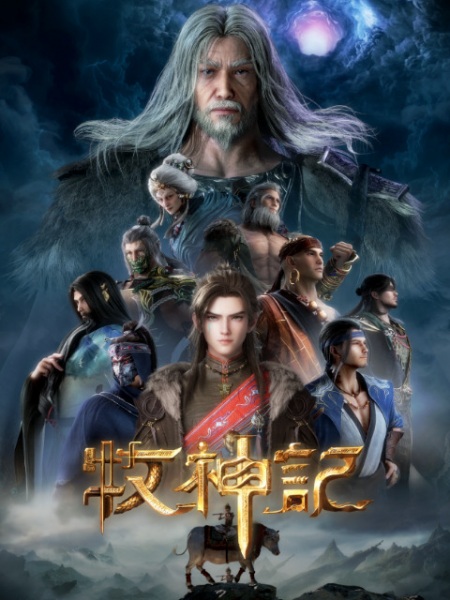
Tales of Herding Gods has a structural problem for English-speaking viewers. The donghua adaptation from Bilibili and Sparkly Key Animation Studio is visually stunning — think the sweeping cinematography of Demon Slayer crossed with the mythological ambition of God of War. But it also drops you into its world with almost no handholding.
You watch Qin Mu grow up in Canlao Village. You see nine weird elders train him in sword, spear, fist, poison, formations, and a dozen other disciplines. You notice they're all disabled. You think: "Okay, disabled martial arts masters — cool aesthetic choice. Like Yoda, but there are nine of them."
That's the trap. The aesthetic is not an aesthetic. The disabilities are not random character design. Every missing limb, every gouged eye, every severed tongue is a direct consequence of defying the gods. These people were punished, shattered, and driven into hiding — and they took the last hope of humanity with them. If you're imagining a retirement home for washed-up warriors, you've got the genre wrong. What you're actually looking at is a Cold War bunker staffed by ex-generals who've been waiting decades for the right soldier to walk through the door.
That hope is Qin Mu. And once you know who his teachers really are, every training scene, every cryptic comment, every flash of anger in the Village Chief's eyes when he speaks about "the heavens" — it all hits differently.
The core revelation: Canlao Village is not a village. It's a sanctuary for nine people who each reached the absolute summit of human potential — the "strongest alive" of their respective eras — and lost everything fighting the divine order — and who are now pouring every last drop of their knowledge into one boy who might finally finish what they started.
The Pattern You Missed
Let me give you the key that unlocks all nine stories at once. Every single elder in Canlao Village shares the same origin arc:
- They reached the absolute ceiling of their path. Not "very good." Not "legendary." We're talking "top 0.001% of everyone who ever lived." The kind of level where other elite fighters are afraid to say your name out loud. Think John Wick, but John Wick is the weakest person in this conversation.
- They challenged the established order. Gods, empires, celestial bureaucracies, ancient sects — each elder looked at the system and said "no."
- The system pushed back. Not with a fair fight. With overwhelming force, divine punishment, or cosmic-level retaliation.
- They lost a piece of themselves. Literally. Arms. Legs. Eyes. Tongues. Every scar is a price paid for rebellion.
- They found each other. Nine broken legends, hiding in the same forgotten wasteland, pooling their knowledge into the one child who might succeed where they failed.
This is not a coincidence. The novel never states it outright, but the implication is devastating: Canlao Village is the last stand of an era that refused to kneel. And Qin Mu is the weapon they're forging.
The Nine Elders — One by One
What follows is who they were before the scars, what they lost, what they taught Qin Mu, and why each one matters to the story's endgame. I've ordered them roughly by narrative prominence rather than combat ranking — the Village Chief gets the longest entry because his identity ties directly into the cosmic-scale plot.
1. The Village Chief — Su Muzhe
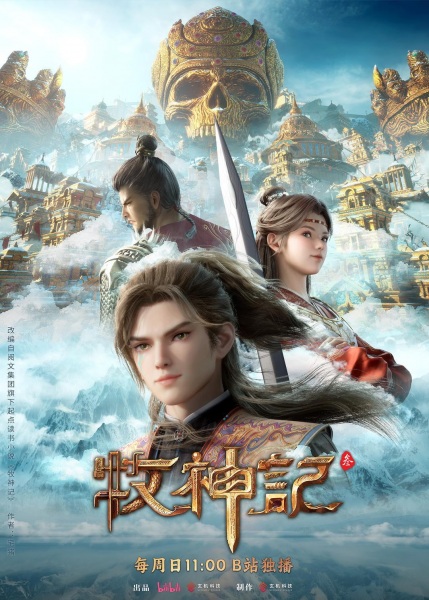
The story: Su Muzhe was the Human Sovereign of a previous era — not a king, not an emperor, but the Sovereign of Humanity, a title that in this world's mythology carries the weight of every human who ever lived. Think less "president" and more "the one person humanity chose to represent them before the gods." His sword technique could suppress multiple gods simultaneously — a single sword diagram of his could lock down an entire battlefield of divine opponents. The gods couldn't kill him outright — that would have made him a martyr — so they did something worse: they severed his limbs and left him alive in a wasteland, a monument to what happens when humanity reaches too high.
And then he started teaching. From a body with no arms and no legs, Su Muzhe taught Qin Mu the essence of swordsmanship — not through demonstration, but through pure transmission of principle. His signature technique, "Sword Treads Mountains and Rivers" (剑履山河), condenses the weight of an entire landscape into a single sword stroke. He didn't just teach Qin Mu how to swing a blade. He taught him the philosophy embedded in the sword path: humanity does not kneel.
Why this matters: The Human Sovereign title is not decorative. In the novel's deeper cosmology, the Sovereign represents humanity's collective will against divine oppression. Su Muzhe passing this legacy to Qin Mu is not mentorship — it's succession. Everything Qin Mu becomes later in the story traces back to this one broken man in a mud hut saying: "You are human. That is enough."
2. Granny Si — Si Youyou
The story: Si Youyou was the Saintess of the Heavenly Demon Sect — and the word "Saintess" here doesn't mean holy. It means chosen. The most talented cultivator of her generation, destined to lead one of the most feared demonic sects in existence. She walked away. More specifically, she stole the sect's most treasured artifact, the Great Education of the Heavenly Demon Scripture (大育天魔经), and vanished into the wasteland. The hunchback? A deliberate disguise. The real Si Youyou is not crippled — she's hiding her identity behind a physical mask she's worn for decades.
What she taught Qin Mu: Si Po Po rebuilt Qin Mu's demonic meridians from scratch, taught him animal-based spirit manipulation (gu arts, think voodoo meets bio-warfare), and — perhaps most importantly — showed him that the line between "righteous" and "demonic" cultivation is a lie told by whoever currently holds power. Her teaching wasn't just technique. It was ideological inoculation against the binary morality the orthodox sects would try to impose on Qin Mu later.
Why this matters: Granny Si dotes on Qin Mu like a grandmother in their daily life. That gentleness coexists with her being a former demonic sect Saintess who could probably dismantle a mid-sized orthodox sect single-handedly. The contrast is not an accident. It's the novel's way of telling you: don't trust labels.
3. Master Ma — The One-Armed Buddha
The story: Master Ma was a direct disciple of the Tathagata himself — the Buddha, the apex being of Thunder Sound Buddhism. He possessed the Azure Dragon Spirit Body, one of the rarest physiques in xianxia lore, making him a natural vessel for the highest Buddhist teachings. And then he fell in love. He married. He had a child. For this, the Buddhist orthodoxy didn't take this well — but Master Ma didn't wait for them to act. To protect his wife and child from the consequences of his choices, he severed his own left arm as a final break from the Tathagata's lineage, and walked into the wasteland with his family before the orthodoxy could move against them.
What he taught Qin Mu: Thunder Sound Buddhist techniques fused with demonic cultivation — a combination that should be impossible. Master Ma embodies the thesis that the Buddha path and the demonic path are two sides of the same coin, not opposing forces. He taught Qin Mu to hold both light and darkness in the same fist without being consumed by either.
Why this matters: Master Ma is the quietest elder. He rarely speaks. When he does, other elders listen. His presence in Canlao Village proves that the sanctuary isn't just for those branded "demonic" — it shelters anyone the orthodox world tried to break for refusing to fit its mold.
4. The Butcher — The Half-Man Who Split the Sky
The story: The Butcher was the undisputed master of the blade path and — in a previous life — the Great Khan of the endless grasslands, a title earned through conquest and blood. He once split the sky with his saber. Not metaphorically. Three times, his blade strike tore open the firmament above the grasslands, and three times the heavens closed it back. The gods responded by sending an opponent who cut him in half at the waist. They left his upper body alive — a message. The Butcher survived and kept swinging.
What he taught Qin Mu: Dominance. The Butcher's blade philosophy is the simplest of all nine paths: hit harder. When Qin Mu hesitates, the Butcher is the one who scoffs and says "again." His training is brutal, physical, and infuriatingly effective. He doesn't teach subtlety because his entire worldview is that subtlety is for people who can't split the sky.
Why this matters: In a village full of broken legends teaching technique and philosophy, the Butcher gives Qin Mu something simpler and perhaps more essential: the refusal to stay down. Every time Qin Mu gets beaten in the outside world, you can hear the Butcher's voice in the back of his head saying "get up."
5. The Blind One — The Spear God Who Sees Without Eyes
The story: Before Canlao Village, the Blind One was the undisputed god of the spear — not a title, a statement of fact. He lost both eyes in a duel against an opponent named Xing Jian, who gouged them out and kept them as trophies. Most cultivators would have died or retired. The Blind One did neither. He developed the Heart's Eye (心神眼) — a perception technique so refined that he can read the flow of qi, the intent behind attacks, and the truth behind illusions without needing physical sight. His bamboo walking staff doubles as a divine spear. In his hands, a stick from the forest is more dangerous than most legendary weapons.
What he taught Qin Mu: Spear techniques and — more critically — the art of seeing what isn't visible. The Blind One taught Qin Mu to perceive the world through qi patterns rather than physical vision, a skill that becomes essential when dealing with illusions, disguises, and enemies who fight from concealment. He also taught Qin Mu something the other elders couldn't: patience. The Blind One spent decades learning to see without eyes. He knows what it means to rebuild yourself from nothing.
Why this matters: The Heart's Eye is not just a combat skill. In the novel's cosmology, true perception is a form of enlightenment. The Blind One's teaching gives Qin Mu a defense against one of the most dangerous threats in this genre: deception that can alter what you believe is true, not just what you see.
6. The Mute — The Craftsman Who Silenced Himself
The story: The Mute inherited the Heavenly Craft lineage of the Kai Huang Dynasty, making him the most skilled artifact forger of his generation. He possessed the Vermilion Bird Spirit Body, a physique that naturally resonates with fire and metal — the two elements essential for forging divine weapons. He cut out his own tongue. Not as punishment. Not as sacrifice. He did it because he had learned secrets about the nature of the heavenly order that were too dangerous to speak aloud, and the only way to guarantee he would never accidentally reveal them was to remove the ability to speak entirely. He chose silence as a form of protection — for himself and for everyone he cared about.
What he taught Qin Mu: Forging, mechanism arts, and the Divine Treasure Forging Record (炼宝神录). The Mute is the reason Canlao Village has weapons. Every divine artifact the elders carry? He made it. He taught Qin Mu not just how to forge, but how to understand a weapon's soul — the difference between a sharp piece of metal and a blade that remembers who wielded it.
Why this matters: In a world where divine weapons can make the difference between life and death, the Mute ensures Qin Mu is never dependent on anyone else for equipment. More importantly, his self-imposed silence is a quiet indictment of the cosmic order: some truths are so dangerous that knowing them is a death sentence. Qin Mu learns this lesson the hard way.
7. The Medicine Master — Healer and Poisoner in One Body
The story: The Medicine Master was once renowned across the cultivation world as a genius who had mastered both healing and poison — two disciplines that usually require opposite temperaments. His reputation drew attention he didn't want. Rather than be hunted or conscripted, he destroyed his own face and half his sight — making himself unrecognizable, undesirable, and unremarkable. He walked into Canlao Village with half a face and a full pharmacy's worth of knowledge, and he's been keeping the other eight elders alive ever since.
What he taught Qin Mu: Herbal alchemy, poison resistance, and — most crucially — body foundation cultivation. The Medicine Master is the reason Qin Mu's physical body can withstand the insane training regimen the other eight elders put him through. Without the Medicine Master's constant adjustment of Qin Mu's meridians, bones, and internal organs, the boy would have literally fallen apart before reaching adolescence. He also taught Qin Mu to respect poison — not fear it, not worship it, but understand it as a tool that requires as much discipline as a sword.
Why this matters: The Medicine Master is the unsung hero of the village. Every elder depends on him. Qin Mu's entire cultivation foundation is built on herbs, pills, and medicinal baths this man prepared. His self- disfigurement is one of the saddest backstories — he didn't lose his face in battle. He chose to destroy it to escape a life of being hunted for his talent.
8. The Cripple — The One-Legged Thief Who Could Steal the Sky
The story: The Cripple was the greatest thief of his era — not a street pickpocket, but a legend who could infiltrate divine palaces, steal secrets from immortal sects, and vanish before anyone realized anything was missing. His single-legged movement technique was so refined that even two-legged masters couldn't catch him. He didn't lose his leg in a fight — he traded it. The details of the trade are obscure, but the implication is clear: whatever he gained was worth a limb. And in the world of Tales of Herding Gods, that means it was something terrifying.
What he taught Qin Mu: Strategy, human psychology, and deception. The Cripple didn't just teach Qin Mu how to move — he taught him how to read people. Who's lying. Who's hiding something. Who's about to stab you in the back. Who's genuinely loyal. These aren't combat skills; they're survival skills, and in a world where divine conspiracies span millennia, they're arguably more important than any sword technique.
Why this matters: Qin Mu enters the outside world as a naive village boy. Without the Cripple's training in reading human nature, he would have been manipulated, betrayed, and killed within the first arc. The Cripple gives him the one thing no other elder provides: street smarts at a cosmic scale.
9. The Deaf One — The Crown Prince Who Drew a Sword God Into Existence
The story: Crown Prince of Tian Tu, a kingdom of unparalleled art. He loved painting more than ruling — and when his kingdom fell, he cut off both ears in penance. Then he discovered the truth: his paintings could contain reality. His masterpiece, "Sword God Carrying a Sword on His Back" (剑神背剑图), traps gods and demons in ink. He draws formations that become physical barriers. His brush is the deadliest weapon in Canlao Village.
What he taught Qin Mu: The painting path — qi-infused formations drawn in mid-air: cages, barriers, battlefield-shaping arrays. Creation and destruction in a single brushstroke.
Why this matters: The Deaf One doesn't teach Qin Mu to fight — he teaches him to control space. His formations let Qin Mu trap enemies far above his cultivation level in painted prisons they can't break.
Nine Paths, One Student: The Complete Inheritance
Look at what Qin Mu received. This is not a normal cultivation curriculum. This is nine separate peak traditions being force-fed into one boy:
| Elder | Path | Domain | Core Contribution to Qin Mu |
|---|---|---|---|
| Village Chief | Sword | Combat — Philosophy | Human Sovereign legacy; technique and worldview |
| Granny Si | Demonic | Cultivation — Gu Arts | Meridian reconstruction; moral independence |
| Master Ma | Buddhist | Spirit Body — Fusion | Buddha-Demon synthesis; inner peace |
| The Butcher | Saber | Combat — Willpower | Unbreakable aggression; refusal to fall |
| The Blind One | Spear | Perception — Precision | Heart's Eye; qi-reading; patience |
| The Mute | Forge | Equipment — Craft | Divine artifact creation; self-reliance |
| Medicine Master | Alchemy | Body — Survival | Physical foundation; poison resistance |
| The Cripple | Strategy | Mind — Deception | Human nature; tactical thinking |
| The Deaf One | Painting | Formations — Control | Space manipulation; array combat |
This is not a balanced education. This is a complete arsenal. Sword for attack. Saber for dominance. Spear for precision. Buddhist calm to anchor the demonic fury. Demonic fury to fuel the Buddhist calm. Poison to weaken enemies. Medicine to strengthen allies. Forging to arm yourself. Strategy to outthink. Painting to reshape the battlefield. Nine paths that should contradict each other — and don't, because the elders themselves had to learn to coexist first.
What This Actually Means for the Story
Canlao Village is not a retirement home for crippled martial artists. It is a last-stand sanctuary — a location so remote, so forgotten, so thoroughly abandoned by the gods that nine of the most hunted beings in history could hide there for decades without being found.
And they didn't just hide. They built. They planned. They took every scrap of their broken legacies and poured them into one child — not because they wanted a successor, but because they needed a weapon. Qin Mu is not just their student. He is their final argument against the heavens.
Here's what this setup means for the larger narrative:
- Every elder's enemy is still out there. The gods who cut off the Village Chief's limbs. The sect that branded Master Ma a heretic. The opponent who gouged out the Blind One's eyes. None of them are dead. They're still in power. And Qin Mu is walking toward them.
- Qin Mu's cultivation speed isn't a plot convenience. When you have nine people who were once the best alive in their respective disciplines personally training you from childhood, with the Medicine Master tuning your body daily, you don't progress at a "normal" rate. You progress like a weapon being forged.
- The nine paths will converge. The novel's deeper arc is about synthesis — taking nine separate ultimate techniques and fusing them into something entirely new. Qin Mu isn't meant to be the best swordsman or the best spearman. He's meant to be the first person to hold all nine traditions in one body without shattering.
The real question the novel is asking: If you gather the knowledge of nine shattered legends and pour it into one person, does that person become a monster? Or does he become something the gods have never seen before — and therefore can't predict?
Where to Watch & Read Tales of Herding Gods
Ready to see these nine elders in action — and catch the hints the donghua keeps dropping? Here's where to watch legally and where to read the novel for the complete backstory.
📺 Watch the Donghua
Muse Asia YouTube — Official Bilibili international channel. Free, legal, English subtitles. Episodes release weekly. This is the best option for most English-speaking viewers.
Watch on Muse Asia YouTube →WeTV International — Official Tencent streaming platform. Available in select regions with English subtitles. Check availability for your country.
Watch on WeTV →⚠️ Tales of Herding Gods is not currently available on Crunchyroll. If it gets licensed, we will update this section.
📖 Read the Original Novel
The donghua covers roughly the first 200 chapters of a novel that runs over 1,500 chapters. The elders' backstories, the cosmic-scale plot, and the deeper worldbuilding are all in the novel — and they go far beyond what the animation will likely ever adapt.
Webnovel.com — Official English translation. The novel is complete in Chinese; the English translation is ongoing. If you want the full story without waiting for seasons of animation, this is the place.
Read on Webnovel →Affiliate link — small commission may apply at no extra cost to you.
🌍 Not in Your Region?
Tales of Herding Gods has limited international distribution compared to bigger titles. If the official streams above aren't available in your country, here's what you can do:
- Request it on Crunchyroll. Crunchyroll has a content suggestion form. The more people request Tales of Herding Gods, the more likely they are to license it.
- Follow Bilibili's international expansion. Bilibili is slowly rolling out more content to global audiences through Muse Asia and other channels. New regions get added periodically.
Legal note: ChineseAnimeTop does not recommend or link to unofficial streaming sources. Please support the original creators by watching through legal platforms.
The Village That Raised a God-Killer
When you rewatch the early episodes of Tales of Herding Gods after reading this, everything changes. The Village Chief's gentle smile when Qin Mu masters a sword form isn't just pride — it's relief. Relief that his legacy won't die with his limbless body. Granny Si's doting isn't just grandmotherly affection — it's a former demonic saintess pouring all the warmth she was denied into the one person she trusts. The Butcher's gruff training isn't cruelty — it's desperation. He knows what's coming for Qin Mu, because what's coming already took half his body.
Nine broken legends. One boy. A wasteland the gods forgot to check on.
The gods are going to regret that oversight.
See you in Da Xu. — Aion