The Donghua Women Built Fandoms Around
The conventional wisdom about donghua's global audience is incomplete. It assumes the viewer is male, watching cultivation power-fantasy on YouTube between gaming sessions. But that picture misses the single most significant driver of donghua's international spread: female fandom. The show that broke donghua into Western consciousness wasn't Battle Through the Heavens — it was Mo Dao Zu Shi, a danmei-adjacent cultivation drama whose international fan base created more fan art, fan fiction, and merchandise demand than the rest of the industry combined. These five series represent the donghua that women around the world have embraced — not as a secondary market, but as the primary engine of donghua's global cultural presence.
A note on our ranking methodology: unlike the domestic and male-oriented global rankings, this list is not driven by view-count data alone. Female-oriented fandom expresses itself differently — through fan creation volume (AO3 works, Pixiv illustrations, Twitter/X fan art, cosplay), community longevity (how long the fandom stays active after a season ends), and cross-cultural reach (which regions produce the most fan content). These metrics capture something that raw viewership misses: passion.
Fox Spirit Matchmaker
狐妖小红娘 · Reincarnation Romance · Vietnam + Thailand Fandom Powerhouse
Vietnam Female Fandom
Thailand Romance Charts
Fan Art Volume
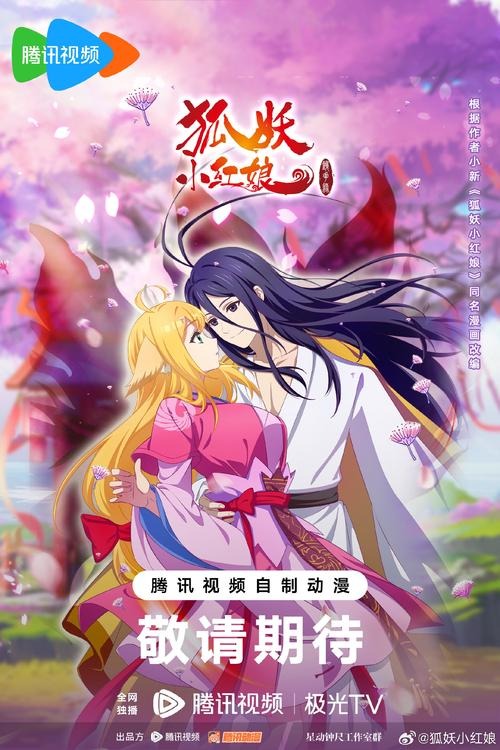
Vietnam and Thailand didn't just watch Fox Spirit Matchmaker. They adopted it. In both countries, the series has transcended "donghua" to become a mainstream cultural presence — the kind of show that generates cosplay meetups in Hanoi parks, fan-made music videos with millions of views, and social-media discourse that spills out of anime circles into general entertainment conversation. If you're a Western donghua fan and you haven't heard of this show, that's not because it's niche. It's because the English-language internet is terrible at detecting fandom that doesn't happen in English.
Why Reincarnation Romance Works Everywhere
The premise is deceptively simple: in a world where humans and spirits coexist, fox-spirit matchmaker Bai Yuechu helps separated lovers reunite across reincarnation cycles. Each arc tells the story of a different couple — lovers torn apart by war, class, misunderstanding, or death — who find each other again in a new life, often without remembering their past. Bai Yuechu's job is to restore those memories, and in doing so, to confront her own centuries-long romantic entanglement with the Daoist priest who's been waiting for her across every lifetime.
This structure is genius-level romance engineering. Each arc is a self-contained tragic love story with a bittersweet resolution, which means viewers can cry cathartically without committing to a 200-episode emotional investment. But Bai Yuechu's own slowly unfolding romance provides the long-term hook — the question of whether she will ever get the happy ending she creates for others. It's Violet Evergarden meets Inuyasha, with Chinese folklore as the binding agent.
Why it matters for you: Start with the "Yue Hong" arc (episodes 1-13). It's the entry point and the emotional baseline. If you don't cry at least once, check your pulse. Vietnamese and Thai fans have produced incredible English fan subs — search "Fox Spirit Matchmaker English sub" and look for the fan communities.
Mo Dao Zu Shi (The Grandmaster of Demonic Cultivation)
魔道祖师 · The Danmei Gateway · AO3 Juggernaut · Global BL Phenomenon
AO3 Donghua Fandom
Fan Creation Volume
Merchandise Market
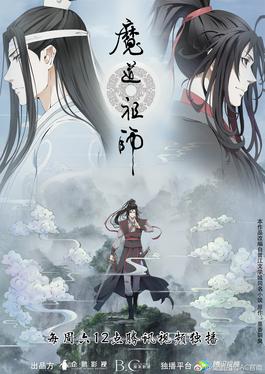
Mo Dao Zu Shi didn't just succeed overseas. It rewired the international perception of what Chinese animation could be. Before MDZS, the Western understanding of donghua was largely limited to cultivation power-fantasy — big fights, glowing swords, ascending to higher realms. MDZS showed that donghua could be romantic — not in the sidelined-love-interest sense, but as the central engine of an intricate political-supernatural mystery. Wei Wuxian and Lan Wangji's relationship, translated through the constraints of Chinese censorship into a bond that is never explicitly romantic but unmistakably profound, became the most analyzed, debated, and celebrated pairing in donghua history.
The AO3 Phenomenon
On Archive of Our Own, the world's largest fan fiction platform, MDZS has more works than most Western TV shows. The sheer volume of fan-created content — novel-length alternate-universe fics, illustrated doujinshi, cosplay photography, fan animations — dwarfs every other donghua combined. This is not passive consumption. This is a global community of mostly female creators who have built an entire cultural ecosystem around MXTX's world.
The fan economy around MDZS is real and measurable. Official merchandise sells out internationally. Fan-made goods — enamel pins, art books, hanfu-inspired clothing — move serious money through Etsy and convention artist alleys. In 2026, the MDZS fandom is self-sustaining in a way that few anime or donghua properties achieve: it doesn't need new official content to stay active. The fans generate their own.
Why it matters for you: MDZS is the definitive donghua gateway for readers and romantics. Watch the donghua first (3 seasons, complete), then read the official English novel from Seven Seas Entertainment to understand what the animation had to leave implicit. The fandom is welcoming and vast — search "MDZS beginner guide" and you'll find dozens of curated entry points.
Link Click
时光代理人 · Annie-Nominated · Modern Mystery · Universal Emotional Core
Award Nominated
Audience Favorite
Fall 2026
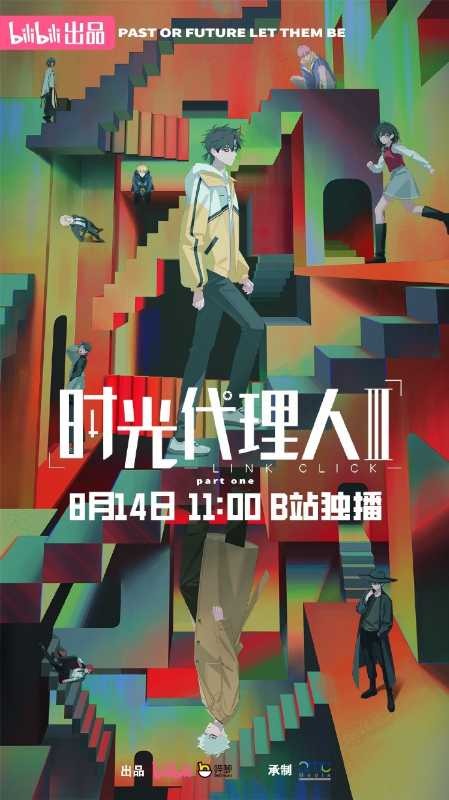
If MDZS is the donghua that women built a fandom around, Link Click is the donghua that proved women's taste is the mainstream. A time-travel mystery about two friends who run a photo studio and enter photographs to solve (or prevent) tragedies in their clients' pasts — this is not the pitch for a blockbuster. And yet Link Click is donghua's most decorated international success, with an Annie Award nomination, universal critical acclaim, and an audience that crosses every demographic line. Its emotional intelligence — the capacity to devastate you in 20 minutes with a story about a earthquake, a lost child, or a promise kept across decades — is weapon-grade.
Why Women Drive Link Click's Global Success
Link Click's emotional palette — grief, regret, the desperate desire to fix the past — resonates with female audiences for reasons that are both universal and specific. The show doesn't sexualize its female characters. It doesn't treat romance as a reward for the male lead. Instead, it treats emotional vulnerability as the highest-stakes drama. When Cheng Xiaoshi enters a photograph and experiences someone else's tragedy firsthand, the tension is not "will he survive?" but "will he be able to bear what he sees?"
This is storytelling that assumes its audience is emotionally literate — that you will understand why a mother's final message to her child, delivered across time through a photograph, is more devastating than any fight scene. Western audiences, particularly women who have been underserved by action-oriented anime, recognized this immediately. Link Click's fandom on Twitter/X and Tumblr is predominantly female, highly analytical, and fiercely protective of the show's reputation.
Why it matters for you: Link Click is 11 episodes per season. Watch Season 1 in a weekend — episodes 3-5 (the earthquake arc) are where the show reveals what it's actually capable of. Season 3 drops Fall 2026, so now is the perfect time to catch up. Available on Crunchyroll and Funimation with official English subtitles.
A Will Eternal
一念永恒 · Comedy Cultivation · Gender-Neutral Appeal · Pan-Audience Hit
Primary Genre
Audience Split
Tonal Entry Point
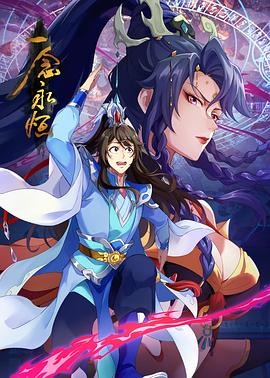
Not every female-oriented viewer wants tragedy. Some want to laugh. A Will Eternal fills a gap in the donghua landscape that is almost embarrassingly obvious in retrospect: a cultivation comedy that prioritizes humor over power-scaling, with a protagonist whose defining trait is not strength or intelligence but cowardice deployed as a survival strategy. Bai Xiaochun is terrified of death, obsessed with longevity, and pathologically incapable of taking anything seriously — including the immortal cultivation system that every other donghua treats with reverence.
The Light Comedy That Women Adopt
The international female audience for A Will Eternal is different from MDZS's or Link Click's. These are viewers who want cultivation-world stories without the emotional weight — the equivalent of curling up with a cozy fantasy novel. Bai Xiaochun's antics (accidentally becoming a sect patriarch, inventing pills that explode, winning battles through sheer unpredictability) provide the cultivation setting without the cultivation stress. The show doesn't ask you to track complex political factions or remember 50-character cultivation hierarchies. It just asks you to enjoy watching a coward fail upward.
This lightness is strategic. A Will Eternal serves as the gateway cultivation donghua for viewers who find the genre intimidating. Women who bounced off Battle Through the Heavens because of its harem undertones or Renegade Immortal because of its darkness often find A Will Eternal to be the version of cultivation they can actually enjoy. And once they're comfortable in the world, they often explore the heavier titles.
Why it matters for you: If cultivation donghua has always seemed too heavy, too male-gazey, or too complicated, start here. Bai Xiaochun is the protagonist who will make you realize the genre can be fun. Available on Tencent Video's YouTube channel with English subtitles.
Ling Cage (Spirit Cage)
灵笼 · Post-Apocalyptic Sci-Fi · High Female Viewership · IMDb Acclaim
High Score
Western-Friendly Genre
High Viewership %
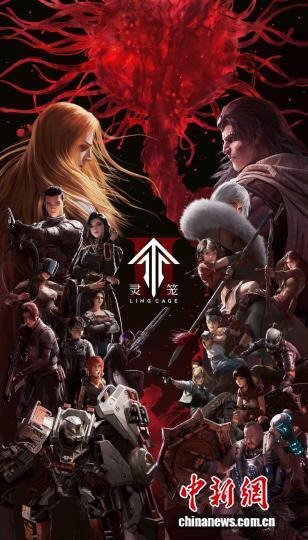
On paper, Ling Cage shouldn't have a predominantly female international audience. It's a grim post-apocalyptic sci-fi series about the last remnants of humanity surviving on a floating fortress, fighting monstrous organisms in powered exoskeletons. It's brutal. Characters die horribly. There's body horror. The color palette is concrete gray and blood red. This is the pitch for a show aimed at the Attack on Titan / Neon Genesis Evangelion demographic — which, in conventional industry thinking, skews male.
And yet.
Why Women Gravitate to the Apocalypse
Ling Cage's female viewership is disproportionately high for the sci-fi action genre, and the reasons are instructive. First: the show's emotional architecture is built around relationships under pressure. The survival-horror framework is not an end in itself — it's a crucible that forces characters to make impossible choices about who to save, who to sacrifice, and how to live with the consequences. These are the questions that drive the best post-apocalyptic fiction (Station Eleven, The Last of Us), and they resonate with audiences regardless of gender.
Second: Ling Cage's female characters are substantial. Not in the "strong female character" checkbox sense, but in the sense that they have interiority, contradictions, and narrative agency. Ran Bing, the female lead, is a military commander whose decisions drive the plot — she is not the protagonist's love interest who occasionally shoots a gun. For female viewers tired of being asked to identify with male protagonists while female characters orbit them, Ling Cage is oxygen.
Third: the show's production values — cinematic direction, a haunting orchestral score, detailed mechanical design that rewards freeze-framing — signal ambition. International female audiences, particularly in sci-fi and fantasy communities, have been trained by decades of underinvestment to recognize when a genre work is actually trying. Ling Cage is trying.
Why it matters for you: If you think donghua is all cultivation and romance, Ling Cage will recalibrate your understanding of what the industry can produce. It's available on Bilibili's YouTube channel. Watch the first three episodes — the worldbuilding is dense, but by episode 3 you'll know whether this is for you. Content warning: body horror, character death, existential dread.
The Lesson: Female Fandom Is Not a Niche
If you take one thing from this list, take this: the international female audience for donghua is not a subcategory. It is the category. The show with the most fan works on AO3 (MDZS). The show with the strongest Western critical acclaim (Link Click). The show that dominates Southeast Asian romance charts (Fox Spirit Matchmaker). These are not secondary successes. They are the successes that the rest of the industry is chasing.
We publish three ranking perspectives — domestic, male-oriented global, and female-oriented global — because no single list can capture what's happening in donghua right now. The domestic list tells you what China is watching. The male-oriented global list tells you what's breaking through on YouTube and Netflix. This list tells you what people love — the shows that generate fan art and fan fiction and cosplay and community, the shows that people don't just watch but inhabit.
If you're a platform executive wondering what donghua to license next, the answer is on this page. If you're a viewer wondering what to watch after you finish your current show, the answer is on this page. And if you're a male viewer who's been told that these shows "aren't for you" — respectfully, you're wrong. Good stories don't have a gender.