What China Is Actually Watching
Every month, English-language donghua coverage makes the same mistake: it ranks shows based on what feels important to Western audiences, not what China's actual 1.4 billion viewers are watching. The data tells a different story. And that story is worth understanding — because today's domestic hits are tomorrow's global exports.
The rankings below are not our opinion. They come from cloud platform data — the streaming equivalent of Nielsen ratings in China. Tencent Video, Bilibili, Youku, and iQiyi all report effective playback market share. We've cross-referenced the June 2026 numbers to give you the five male-oriented donghua that dominated Chinese screens last month.
Some of these you'll recognize. Some you won't. That's the point.
Renegade Immortal
仙逆 · Tencent Video · 5.8% Market Share
Market Share
Male Demographic
Platform
Fan Content Volume
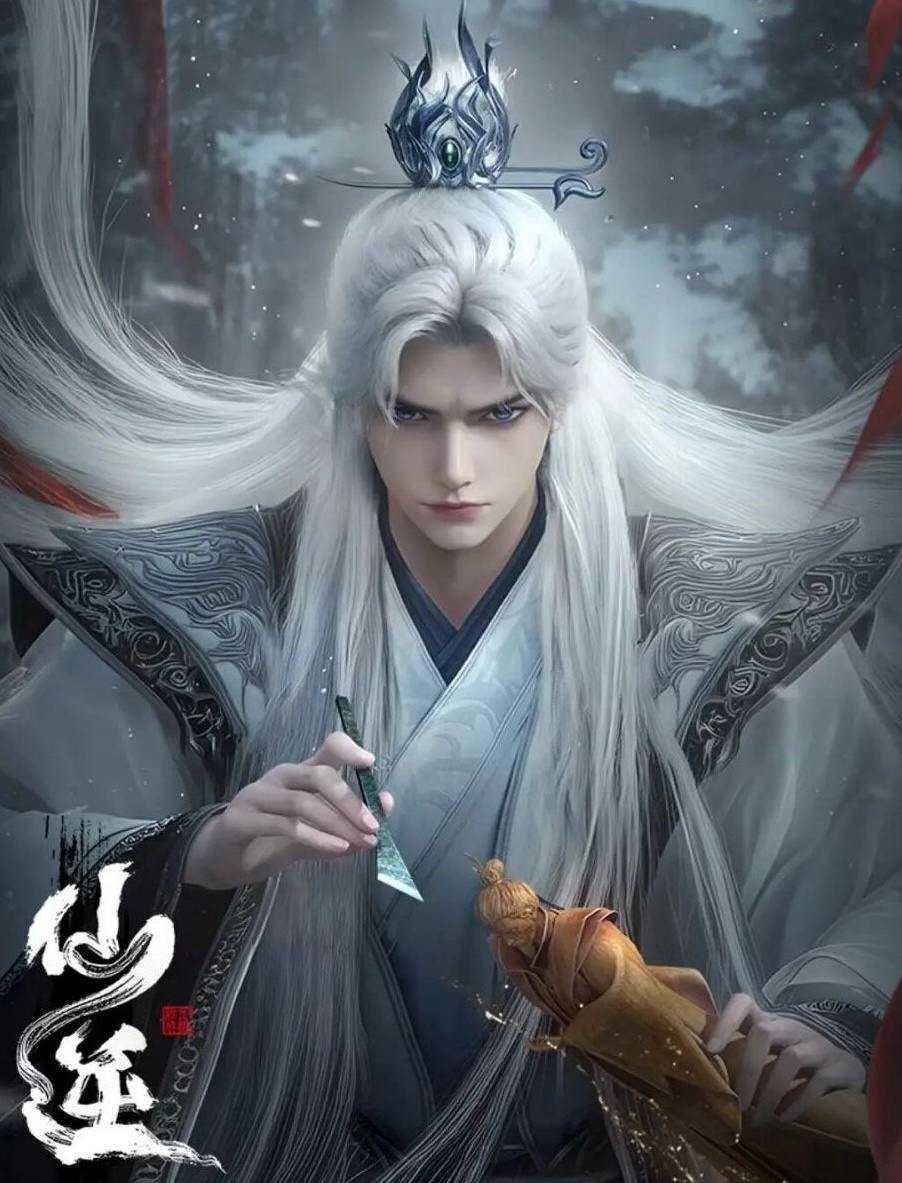
Let's be clear about what 5.8% means. In a market with hundreds of active donghua series airing simultaneously across four major platforms, one show taking nearly 6% of all effective playback is not a lead — it's a rout. Renegade Immortal has held the #1 male-demographic spot for months, and June was no exception.
Why It Works: The Wang Lin Blueprint
Wang Lin is not a hero. He is not righteous. He does not want to save the world. What he wants — what drives every frame of Renegade Immortal — is revenge. His family was slaughtered. His sect betrayed him. His talent was mocked as mediocre. And every ounce of his cultivation journey is powered by a cold, patient, implacable need to make everyone who wronged him pay.
This is not your typical cultivation fantasy. There is no tournament arc where the underdog proves himself to cheering crowds. There is no harem of jade-skinned maidens competing for his attention. Wang Lin kills. He schemes. He disappears for decades, cultivates in secret, and returns when his enemies have forgotten he exists. The satisfaction is not in watching him become powerful — it's in watching him become inevitable.
The fan-content numbers back this up. Renegade Immortal generates more Bilibili edits, doujin art, and discussion-thread engagement than any other male-oriented donghua. When Wang Lin achieves a breakthrough, Chinese social media notices. When he kills a major antagonist, it trends. This is not passive viewership — this is an audience that cares.
The Dark Horse Nobody Saw Coming
Here's the part that matters for international viewers: Renegade Immortal is also the fastest-growing donghua in Japan right now, with a stable high rating on MyAnimeList and surging discussion on Japanese anime forums. The reason is simple — Japanese audiences, tired of isekai power-fantasy protagonists who get everything handed to them, are discovering the appeal of a protagonist who earns every single win through patience and brutality. Wang Lin is what happens when you take the "revenge story" premise seriously instead of using it as window dressing.
Why it matters for you: If you've ever complained that cultivation donghua protagonists are too passive or too noble, Renegade Immortal is the correction you've been waiting for. Start from episode 1. Do not skip. The payoff structure requires the slow build.
A Mortal's Journey to Immortality — Mulan War Arc
凡人修仙传·慕兰之战篇 · Bilibili · 2.7% Market Share
Market Share
Late June Weekly
Platform
Core Audience
A Mortal's Journey went on hiatus. Then it came back. And in the last week of June, it was the single most-watched donghua episode in China. This is the Bilibili effect in action — a platform where users pay for content, write 5,000-character reviews, and argue about cultivation mechanics in the comments section at 3 AM. The Mulan War Arc (慕兰之战篇) dropped mid-June and immediately reminded everyone why this show has been the gold standard for "serious" cultivation donghua for years.
The Anti-Power-Fantasy Power Fantasy
Han Li is the opposite of every cultivation protagonist you've met. He has no special bloodline. No ancient master living in his ring. No heaven-defying luck. What he has is caution — the kind of bone-deep caution that comes from being an ordinary person in a world where immortals can erase you with a thought. He plans every battle. He stockpiles talismans. He runs away when he can't win. And when he does fight, it's because he's spent fifty chapters preparing for that exact moment.
For Chinese audiences, this resonates on a level that foreign viewers sometimes miss. Han Li is the fantasy of the zhong chan — the educated, middle-class professional who advances not through luck or connections but through meticulous planning and risk management. He's the cultivation-world equivalent of the person who reads the contract before signing. And in a genre saturated with arrogant young masters and heaven-sent opportunities, that restraint feels radical.
Why the Mulan War Arc Matters
The Mulan War is not a tournament arc. It's a war arc — full-scale conflict between cultivation nations, with logistics, alliances, betrayal, and casualties that actually stick. Han Li enters not as a hero but as a participant trying to survive and extract value. The arc showcases what A Mortal's Journey does better than any other cultivation donghua: making the world feel larger than the protagonist. Han Li matters, but the Mulan War would happen with or without him. That sense of scale — of a living world that doesn't revolve around the main character — is vanishingly rare in the genre.
Why it matters for you: If you bounced off cultivation donghua because the protagonists felt like empty power-fantasy vessels, try A Mortal's Journey. Start with the remastered Season 1 on Bilibili's YouTube channel. Give it ten episodes — Han Li's cautious, methodical approach is an acquired taste, but once it clicks, no other cultivation show will feel the same.
Cang Yuan Tu 3
沧元图 3 · Youku · Stable Long-Run Anchor
Youku Donghua
Engine
Format
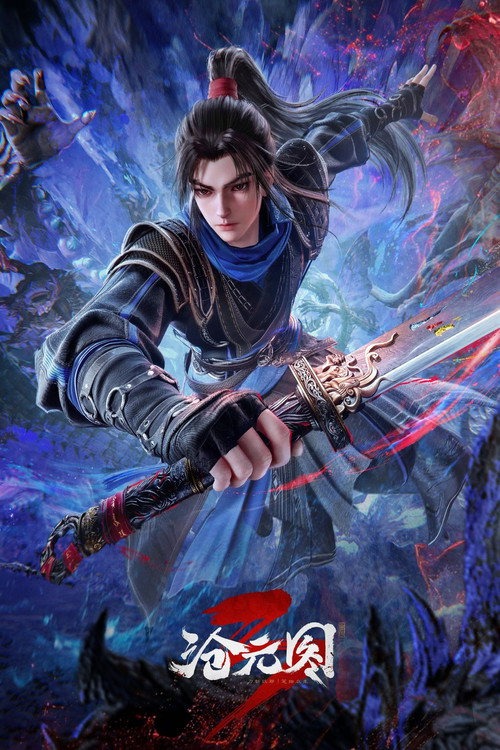
Youku doesn't win many donghua battles. But with Cang Yuan Tu 3, they've built something Tencent and Bilibili can't easily replicate: a long-running pillar franchise that viewers return to week after week, year after year. Season 3 continues I Eat Tomatoes' story with the kind of steady, reliable quality that doesn't generate spikes on social media but accumulates a massive loyal audience through sheer consistency.
The UE5 Difference
Cang Yuan Tu was one of the first major donghua to adopt Unreal Engine 5 for full production, and Season 3 is where that investment pays off. The fight choreography is genuinely next-level — not just in terms of particle effects (though those are impressive) but in camera work. UE5 gives the animation team the ability to move the virtual camera through combat scenes in ways that traditional 3D animation pipelines struggle to match. When a spear thrust tracks through space, you feel the velocity. When a cultivation technique explodes, the shockwave has physical weight.
The trade-off is that UE5 donghua can sometimes feel like watching a video game cutscene — a criticism that Cang Yuan Tu hasn't entirely escaped. But for its core audience, the game-like visual language is a feature, not a bug. These are viewers who grew up playing Genshin Impact and Honkai: Star Rail. They're comfortable with this aesthetic. They expect it.
Why it matters for you: If you care about animation technology and want to see where the industry is heading technically, Cang Yuan Tu 3 is your benchmark. The story is standard I Eat Tomatoes fare — if you've read one of his novels, you know the rhythm — but the visual execution pushes boundaries.
Sword of Coming — Season 2
剑来 第二季 · Tencent Video · The Scholar's Donghua
Core Audience
Source Quality
Platform
If Renegade Immortal is the blockbuster and A Mortal's Journey is the prestige drama, Sword of Coming is the literary novel that happens to be animated. Its audience skews older and more educated than the typical cultivation donghua viewer — university students, young professionals, readers who engage with the source material's philosophical digressions rather than skipping to the fight scenes.
Donghua for People Who Read
The source novel, by Fenghuo Xizhu Hou (烽火戏诸侯), is widely considered one of the best-written web novels in the cultivation genre — not because of its power system (which is intricate) or its fight scenes (which are good), but because of its prose. Fenghuo writes with a literary density that most web-novel authors avoid, layering classical Chinese references, poetry, and philosophical asides into what is ostensibly a martial-arts fantasy. The donghua adaptation preserves more of this texture than you'd expect.
Season 2 adapts the "national politics" arc, where the protagonist Chen Ping'an moves from personal cultivation to navigating the power structures of empires and immortal sects. This is wuxia-meets-court-intrigue territory — Game of Thrones with sword qi. The fight scenes are present but secondary; the real tension comes from dialogue, strategy, and the slow revelation of who is playing who.
Why it matters for you: If you think cultivation donghua are all mindless power-ups and face-slapping, Sword of Coming is the counterargument. It demands patience and rewards attention. Not a casual watch — but for the right viewer, it's the best thing on this list.
The Great Ruler — Year-Run Edition
大主宰 年番 · iQiyi · Tian Can Tu Dou Trilogy Finale
Format
Final Chapter
Platform
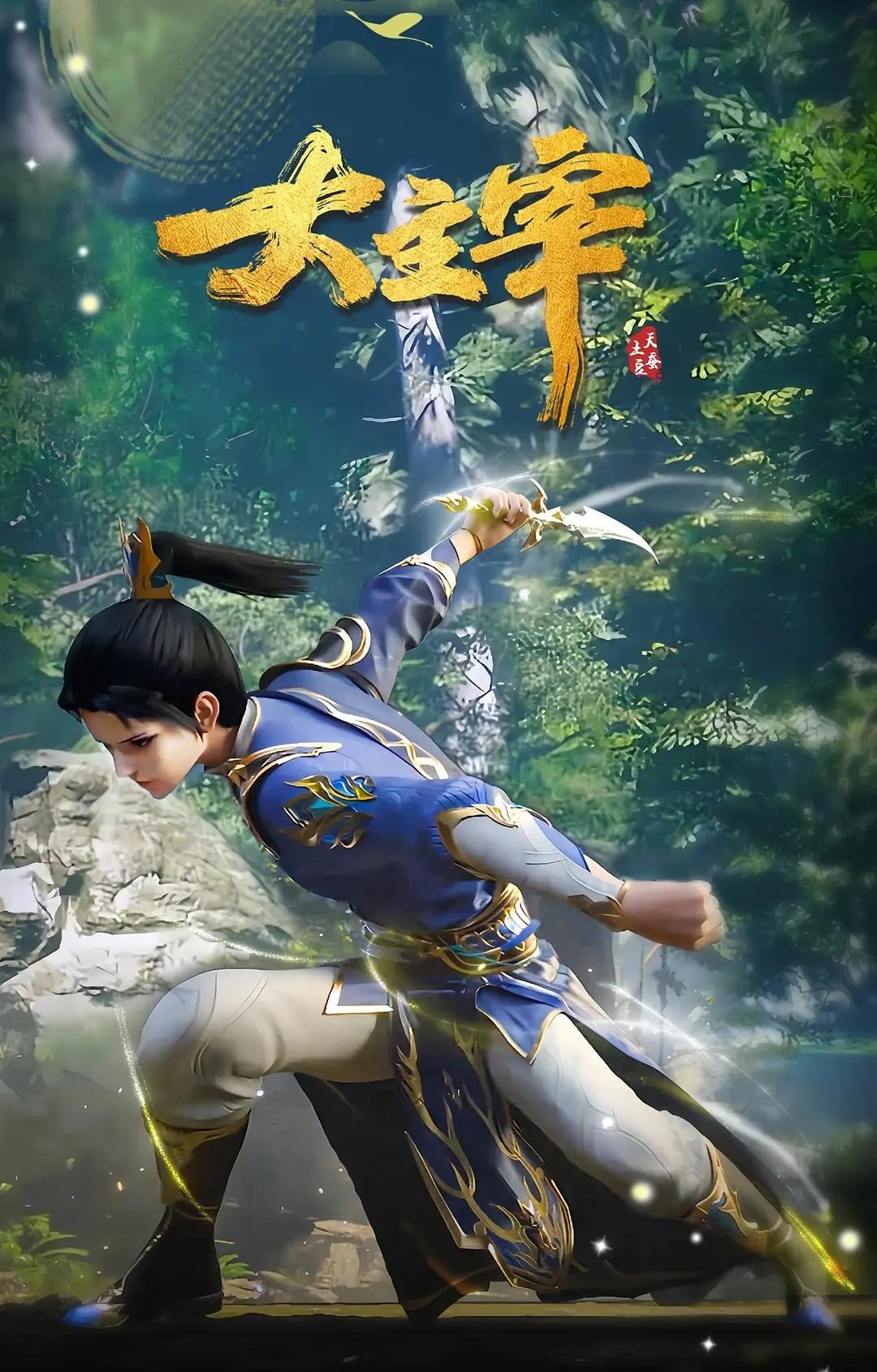
Tian Can Tu Dou (天蚕土豆) owns the "potato trilogy" — Battle Through the Heavens, Wu Dong Qian Kun, and The Great Ruler — three of the most-read web novels in Chinese history. The Great Ruler is the final chapter, the culmination of a shared universe that spans thousands of chapters and has shaped an entire generation of cultivation-fantasy readers. The year-run format means episodes drop every week without seasonal breaks — a relentless content pipeline designed for the audience that just wants more.
Comfort Food, Not Haute Cuisine
Let's be honest about what The Great Ruler is and isn't. It is not innovative. It does not subvert tropes. Its protagonist, Mu Chen, follows the classic cultivation-fantasy template: talented underdog → spirit beast companion → academy arc → tournament arc → realm ascension → repeat. The pleasure is not in surprise but in familiarity — knowing exactly what kind of story you're getting and settling in for hundreds of episodes of it.
And there is a real audience for this. The "sinking market" (下沉市场) — viewers in smaller cities and towns who watch on mobile devices during commutes and lunch breaks — sustains year-run donghua at a scale that prestige seasonal shows can't touch. These viewers are not writing analytical reviews on Bilibili. They are not generating social-media buzz. They are simply watching, every week, in numbers that add up to a cultural force.
The trilogy connection adds emotional weight for long-time readers. Characters from Battle Through the Heavens and Wu Dong Qian Kun appear in The Great Ruler's later arcs, creating the kind of shared-universe crossover that Marvel trained global audiences to appreciate. For Chinese viewers who grew up reading these novels on Qidian, seeing Xiao Yan and Lin Dong show up in Mu Chen's story is genuinely moving — the closing of a chapter in their own reading lives.
Why it matters for you: If you're a completionist who wants to understand the full "Potato Universe," start with Battle Through the Heavens (5-season donghua, also a year-run) and work your way here. If you're just curious what the most mainstream possible cultivation donghua looks like, this is it — the platonic ideal of the genre, executed competently and delivered endlessly.
Wait — Where Are Lord of Mysteries, Link Click, and To Be Hero X?
If you've been following our monthly rankings, you'll notice this list looks nothing like our Top 20. That's intentional. Here's why:
- Our monthly rankings are curated for international English-speaking audiences. We prioritize shows available on Crunchyroll, Netflix, and YouTube with official subtitles. We rate based on cross-cultural accessibility, not raw viewership.
- This domestic ranking is pure data — cloud platform effective playback, no curation, no accessibility filter. It reflects what Chinese viewers on Chinese platforms are watching.
The two lists barely overlap. Lord of Mysteries, our #1 pick for international audiences, doesn't appear here because it's a seasonal release on a different platform with a different audience composition. Link Click and To Be Hero X are 2D productions that appeal to anime fans — a demographic that overlaps with but is not identical to the 3D cultivation audience that drives domestic cloud data.
Both lists are valid. They're just measuring different things. Understanding the gap between them is, in our opinion, the single most important insight for anyone trying to understand the donghua industry in 2026.
Want the global perspective? See how these same shows perform overseas →
Global Overseas TOP 5 →