Tang San's Hidden Weapons: How a Martial Arts Genius Conquered a Spirit World
Imagine you are the greatest martial arts prodigy your sect has ever produced. You have mastered every hidden weapon in the Tang Sect's thousand-year arsenal. You have built the Buddha Fury Tang Lotus — a mechanical nightmare that fires hundreds of poison needles in a single trigger pull — with your own hands. And then you throw yourself off a cliff, because the sect elders have decided your talent is a threat to their authority, and death is preferable to letting them take your secrets. You wake up in a different world. A world where everyone fights with spirits — magical companions summoned from their souls — and the idea of a "hidden weapon" is considered a coward's trick, a dishonorable shortcut. You are six years old. You have no spirit power. And you have just decided that this world is going to learn what a Tang Sect disciple can do.
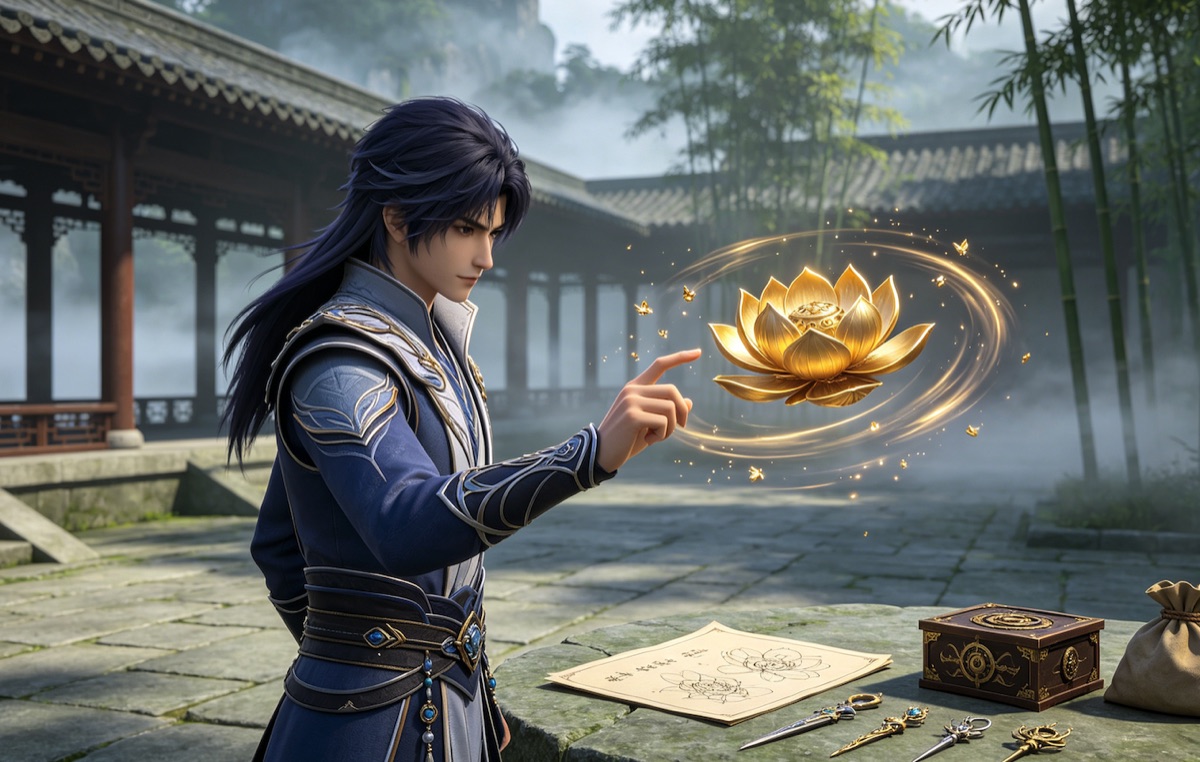
This is the premise of Soul Land, and it is the hidden weapon system — not the spirit rings, not the spirit beasts, not the Tang Sect techniques — that makes Tang San one of the most distinctive protagonists in donghua. He enters a world that has spent millennia optimizing for one kind of power and says, quietly, at age six: you have been optimizing for the wrong thing. Every spirit master in Soul Land fights with their spirit. Tang San fights with his spirit and a mechanical arsenal that no one in this world has ever seen, that no one knows how to defend against, and that he can build from scratch using materials every other cultivator considers worthless. It is not a fair fight. It was never meant to be.
The Tang Sect Arsenal: Death From the Shadows
The Tang Sect was the most feared assassination organization in Tang San's original world, and its philosophy was simple: if your enemy knows where the attack is coming from, you have already failed. Hidden weapons are not "dishonorable." They are efficient. Why announce your presence when silence works better? Why fight fair when fairness means giving your enemy a chance to kill you? The Tang Sect spent a thousand years perfecting the art of killing people before they knew they were in a fight. Tang San brought that thousand-year tradition into a world that had never encountered it.
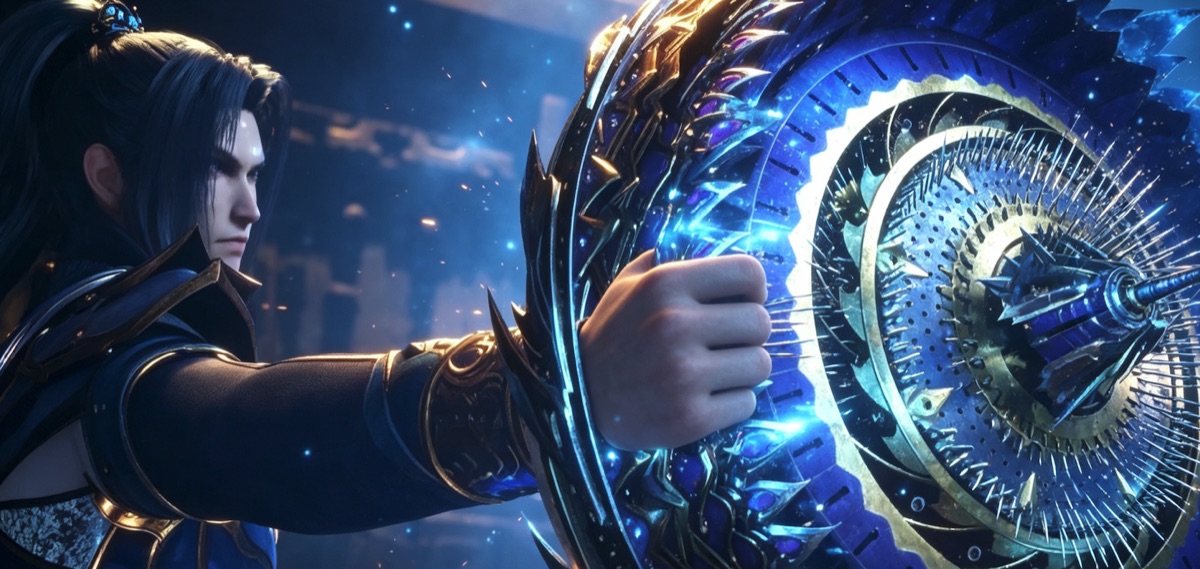
Buddha Fury Tang Lotus (佛怒唐莲). The crown jewel of the Tang Sect arsenal and Tang San's most devastating weapon. It looks like a closed lotus flower made of metal — small enough to hold in one hand, beautiful enough to be mistaken for a decoration. When triggered, it blooms. The petals open, and hundreds of poison-tipped needles fire in every direction simultaneously. There is no dodging Buddha Fury Tang Lotus. If you are in the room when it triggers, you are hit. If you are hit, you are dead — the poison is a Tang Sect formula that has no antidote. Tang San builds one in the Soul Land world from scratch, using spirit beast materials to approximate the metallurgy and alchemy of his original world. The moment he completes it, he becomes the most dangerous six-year-old in the history of either world.
Yama's Invitation (阎王帖). A single-use assassination tool named after the king of hell for a reason. It is a thin, nearly invisible needle coated in a poison that attacks the spirit directly — bypassing physical defenses to strike at the core of a spirit master's power. In the Soul Land world, where every fighter's strength comes from their spirit, a weapon that attacks spirits rather than bodies is an existential threat. Yama's Invitation cannot be mass-produced. Each one requires materials so rare and a crafting process so precise that Tang San only makes a handful across the entire series. But every single one he makes changes the balance of power in whatever conflict it appears in.
Rain of Pear Blossom Needles (暴雨梨花针). The ultimate area-denial weapon. Unlike Buddha Fury Tang Lotus, which fires in all directions, Rain of Pear Blossom Needles is a directional cone — a focused wave of needles that can clear an entire battlefield in the direction it is aimed. It is inspired by the pear blossom storm, a meteorological phenomenon where pear blossoms are torn from trees by wind and fill the air like snow. The Tang Sect's version fills the air with something much less romantic. Tang San uses this primarily against spirit beast hordes and large-scale battles where precision targeting is less important than saturation coverage.
Shadowless Needles (无影针). The assassin's tool. Hair-thin needles that are nearly impossible to see in flight and leave no visible wound on impact. Designed for silent kills at medium range, Shadowless Needles are Tang San's preferred tool when subtlety matters — when he needs to eliminate a target without anyone knowing a fight happened. In a world where spirit masters broadcast their attacks with glowing auras and dramatic energy signatures, a weapon that kills without fanfare is practically a different form of warfare.
Mechanical Crossbows and Launchers. The Tang Sect did not only deal in needles and poisons. Tang San carries a wrist-mounted crossbow — compact, concealable, capable of firing armor-piercing bolts in rapid succession. He also builds larger launchers for siege scenarios and trap arrays that turn entire buildings into kill zones. The versatility is the point. A spirit master has one spirit and a handful of spirit abilities. Tang San has a tool for every situation, and he can switch between them faster than a spirit master can activate a new spirit ring.
Why Hidden Weapons Are So Effective in Soul Land
The hidden weapon system is not just "cool gadgets." It exploits a fundamental weakness in Soul Land's combat paradigm. Spirit masters train their entire lives to fight other spirit masters. They learn to read spirit power fluctuations, to anticipate spirit ability activations, to counter elemental matchups. They do not learn to defend against a mechanical crossbow bolt traveling faster than any spirit ability can be cast. They do not learn to detect poison that has no spirit power signature — because in their world, poison is always delivered through a spirit ability, and spirit abilities are always detectable.
Tang San's weapons are invisible to spiritual sensing. A Tang Sect needle does not emit spirit power. It does not glow. It does not announce itself with a dramatic activation sequence. By the time a spirit master realizes they have been hit, the poison is already circulating. This is not just a tactical advantage. It is a systemic dismantling of Soul Land's entire combat doctrine — and the spirit masters who face Tang San have to learn, the hard way, that everything they know about fighting is incomplete.
The crafting itself is a form of cultivation. Tang San does not just use hidden weapons; he makes them, and the process of making them is as important as the weapons themselves. Each Buddha Fury Tang Lotus requires metallurgy that Tang San has to rediscover using Soul Land materials. Each Shadowless Needle requires a forging process so precise that a single mistake ruins the batch. The crafting is Tang San's meditation, his connection to his former life, and his reminder that he was a genius in two worlds, not just one. When he finishes a weapon, he is not just arming himself. He is asserting that the Tang Sect's thousand-year tradition is alive, in his hands, in a world that has never heard of it.
The Philosophy: Why "Dishonorable" Is Just Another Word for "Smart"
Soul Land's cultivation culture looks down on hidden weapons. Spirit masters are supposed to face each other openly, spirit against spirit, power against power. Using tools — especially tools that attack from concealment — is considered dishonorable, a violation of the unspoken code that governs spirit master combat. Tang San's response to this is, essentially: your code was written by people who never had to fight someone stronger than themselves.
This is the philosophical core of Tang San's character, and it is what separates him from the "honorable warrior" archetype that dominates cultivation fiction. Tang San does not care about honor. He cares about winning — and more specifically, he cares about surviving long enough to protect the people he loves. He grew up in the Tang Sect, where the only honor was completing the mission and coming home alive. He applied that philosophy as an adult assassin, and he applies it as a six-year-old in a world of spirit masters. The scale has changed. The principle has not.
This creates friction with almost every other character in the series, and that friction is the source of some of Soul Land's best moments. When Tang San defeats a spirit master twice his level using a Shadowless Needle coated in paralytic poison, the defeated spirit master rages about "cowardice." Tang San's response is never to defend his methods. It is to point at the unconscious enemy and say, quietly, you are alive because I chose poison instead of a blade. You are welcome. He is not cruel. He is efficient. And efficiency, in a world that has spent millennia glorifying inefficient combat, looks like cheating to people who have never had to fight for their lives.
Bottom line: Tang San's hidden weapons are not "cool gadgets." They are the physical manifestation of a different philosophy of combat — one that values efficiency over honor, results over spectacle, and winning over looking good while losing. The spirit masters of Soul Land have never encountered this philosophy before. By the time they understand it, they are already on the ground.
📌 Save this guide — it will help you recognize every hidden weapon Tang San deploys in the donghua.
💬 Which hidden weapon would you want most: the area-clearing Buddha Fury Tang Lotus or the invisible Shadowless Needles?