Perfect World Worldbuilding: Inside Donghua's Most Ambitious Fantasy Realm
Most cultivation stories give you a continent. Perfect World gives you three thousand Dao provinces, each one the size of a small planet, separated by distances that would take a normal cultivator centuries to cross, populated by creatures that predate the invention of mercy. And at the center of this impossibly vast world is a child. His name is Shi Hao. He was born with a Supreme Bone — the rarest and most powerful cultivation foundation in existence. And when he was a toddler, someone tore it out of his chest and left him to die. He did not die. And the world has been paying for that ever since.
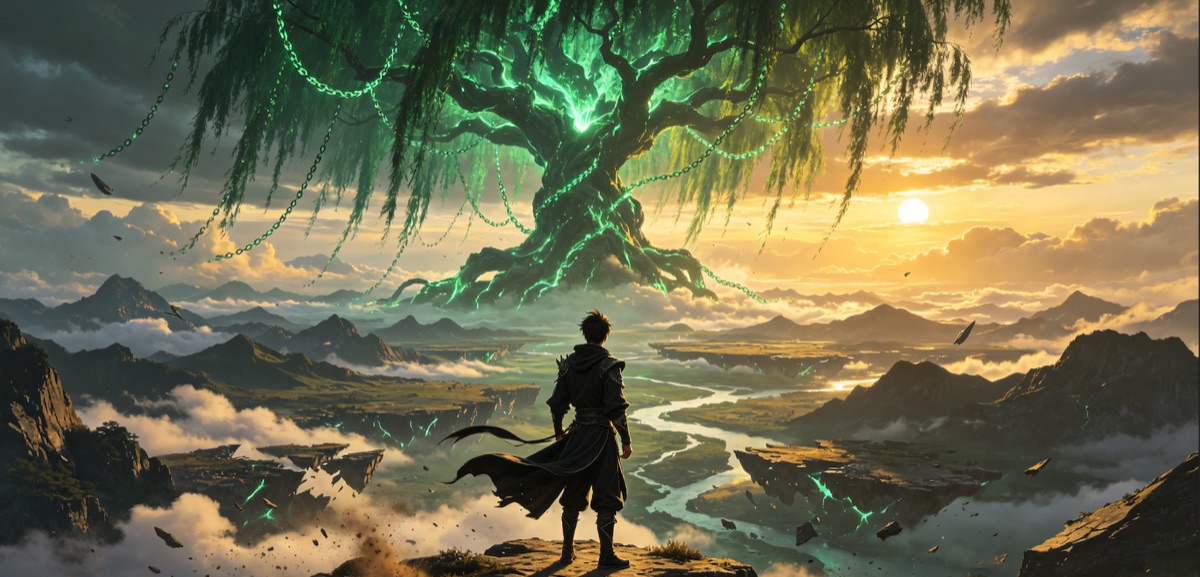
The scale of Perfect World's worldbuilding is not an accident. It is the point. Chen Dong, the novel's author, built the Three Thousand Dao Provinces as a deliberate rebuttal to the trend of "small world" cultivation stories where the protagonist cleans up their home continent in fifty chapters and then needs a bigger map. Perfect World starts with the biggest map possible and dares you to believe the protagonist can fill it. The fact that Shi Hao — a child from a backwater village in the wastelands, whose Supreme Bone was stolen before he learned to walk — eventually becomes a figure whose name shakes the entire realm is not just a power fantasy. It is an argument about scale. About how large a story can be before it collapses under its own weight. And about why the biggest stories need the smallest beginnings.
The Three Thousand Dao Provinces: A Map Without Edges
The Three Thousand Dao Provinces is not a poetic name. It is a literal count — or was, before wars, cataclysms, and the passage of time measured in millions of years blurred the boundaries. Each province is a self-contained cultivation ecosystem: its own sects, its own spirit veins, its own ancient ruins, its own resident monsters that have been alive longer than most cultivation dynasties. Travel between provinces is not something ordinary cultivators do. You need formation arrays, ancient teleportation relics, or a cultivation base so advanced that the distance stops mattering. For the first hundred chapters of the novel — and the entirety of the donghua so far — Shi Hao operates within a single region, the Wasteland, which is considered a backwater so remote that the great sects of the central provinces do not even bother to exploit it.
This is the first thing you need to understand about Perfect World's scale: when Shi Hao defeats the strongest cultivator in the Wasteland, he has not "won the realm." He has graduated from kindergarten. The Wasteland is not the world. It is not even a significant fraction of the world. It is the tutorial zone, and the story spends more time there than most cultivation novels spend in their entirety.
The provinces operate on a hierarchy that is never explicitly stated but is consistently visible in the narrative. At the bottom: the wastelands and border regions — low spiritual energy, weak sects, no ancient inheritances worth fighting over. In the middle: the named provinces with established cultivation dynasties, sect alliances, and occasional appearances by figures who have lived long enough to remember the last era. At the top: the forbidden zones, the ancestral lands of the archaic vicious beasts, and the places where the boundary between the mortal realm and the higher realms grows thin. Shi Hao's journey takes him through all three tiers, and the transition between them is one of the great structural pleasures of the novel — each time you think you understand the scope of the world, the story pulls back and shows you another layer.
The Archaic Vicious Beasts
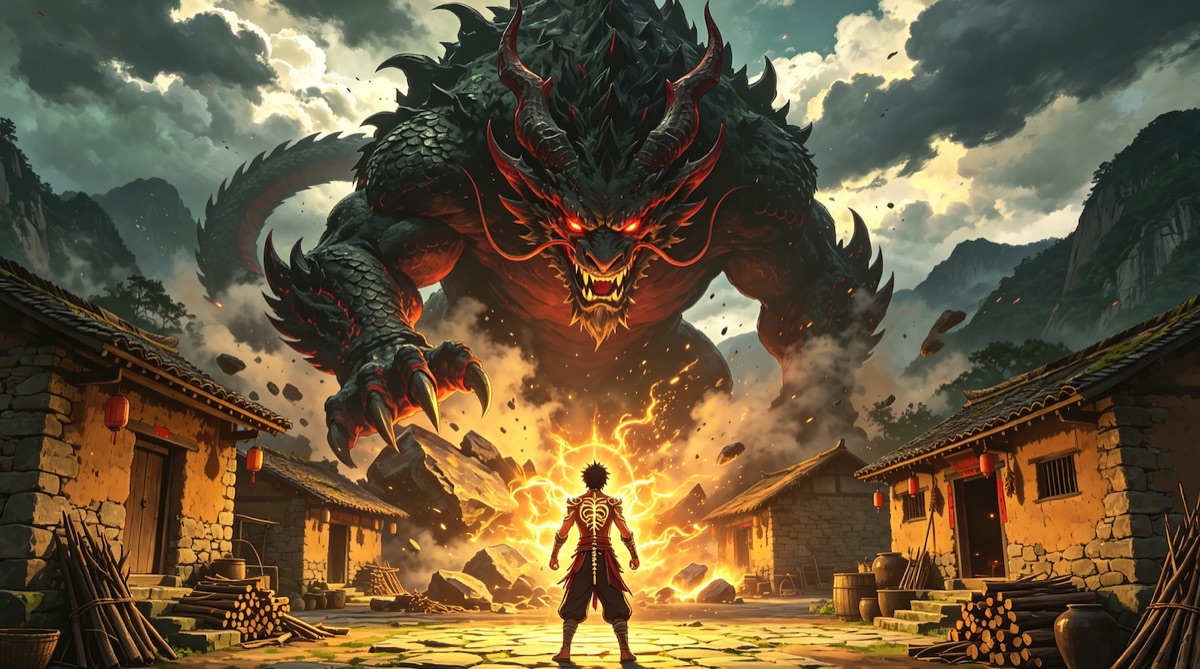
Perfect World's most distinctive worldbuilding contribution is its bestiary. The archaic vicious beasts are not "monsters" in the RPG sense — enemies to be killed for experience points. They are sapient, ancient, and in many cases more powerful than the gods humans worship. Some of them remember the creation of the Three Thousand Dao Provinces. Some of them participated in it. The strongest among them — the Ten Vicious, the true apex predators of this universe — have cultivation bases that exceed most deities.
Shi Hao's relationship with the archaic beasts is one of the most unusual dynamics in cultivation fiction. He does not hunt them for materials. He befriends them. He learns from them. In some cases, they raise him. The Willow Deity, an ancient tree spirit that serves as Shi Hao's first true mentor, is one of the most memorable mentor figures in the genre precisely because it is not human. It does not speak in human idioms. It does not value human priorities. It teaches Shi Hao cultivation not because it wants him to "become strong" in the human sense but because it recognizes something ancient in his Supreme Bone — something that predates the current era — and is curious to see what happens when it awakens.
This is the second thing you need to understand: Perfect World's world is not built for humans. Humans are a recent addition. The archaic beasts were here first, and the cultivation techniques humans have developed are, in many cases, crude imitations of the beasts' innate abilities. The Supreme Bone that was torn from Shi Hao's chest is not a human inheritance. It is something older — something the archaic beasts recognize — and the fact that a human child was born with it is a cosmic anomaly that every major faction in the realm is either trying to exploit, replicate, or destroy.
The Supreme Bone: A Power That Predates Human Cultivation
The Supreme Bone is the rarest cultivation foundation in Perfect World's cosmology, and understanding what it is — and what it means that it was stolen — is essential to understanding Shi Hao. The bone is not a weapon. It is not a technique. It is a natural organ that manifests in one person every few million years, and it grants that person an intuitive connection to the fundamental laws of the universe that no amount of cultivation can replicate. Someone with a Supreme Bone does not learn techniques. They remember them — as if the bone contains genetic memory of the universe's original state, before the Three Thousand Dao Provinces were divided, when all cultivation was one path.
When Shi Hao's cousin, Shi Yi, has the bone surgically extracted and implanted into his own body, it is not just a theft. It is a violation of the natural order. The Supreme Bone was meant for Shi Hao. The universe chose him. And Shi Yi — a prodigy in his own right, raised by a cultivation dynasty that has produced geniuses for generations — decided that being born with talent was not enough. He needed something that could not be earned. Something that could only be taken.
What makes Shi Hao's response to this theft so compelling is that he does not spend the story obsessing over revenge. He wants his bone back. He will get it back. But the theft also frees him — because without the Supreme Bone, Shi Hao has to cultivate the hard way. He has to build his foundation from scratch, using only his will, his intelligence, and the harsh education provided by the Wasteland's monsters and elders. By the time he reclaims his bone, he has become something that neither the bone alone nor cultivation alone could have produced: a cultivator who understands power from both directions, the innate and the earned, the ancient and the scrapped-together. The theft was an attempt to cripple him. It made him stronger than he would have been if he had kept the bone from birth.
Why This Worldbuilding Matters for the Donghua
Adapting Perfect World for animation is a task of staggering difficulty. The scale alone is a production nightmare: how do you convey "three thousand provinces, each the size of a planet" without the audience's eyes glazing over? The donghua's answer, so far, has been to focus on the Wasteland and to let the wider world exist as rumor, legend, and the occasional terrifying visitor. When a cultivator from a mid-tier province appears in the Wasteland and casually demonstrates abilities that the Wasteland's strongest fighters cannot comprehend, the audience understands the scale without needing a narrator to explain it.
The archaic beasts present a different challenge. CGI creatures in Chinese animation have a mixed track record — for every well-rendered beast, there is a rubbery, unconvincing one that undermines the scene. The Willow Deity and the earliest archaic beasts Shi Hao encounters in the donghua are handled with restraint: they are suggested more than shown, their presence communicated through atmosphere and sound design rather than full-body CGI renders. This is wise. The beasts are supposed to feel older than the world. Showing them too clearly, too soon, would make them feel like boss monsters instead of the cosmic entities they are.
The Supreme Bone's theft and recovery is the emotional core the donghua needs to nail. The flashback to infant Shi Hao having his chest cut open — the visual of a cultivation elder holding a glowing bone fragment while a child screams — needs to be one of the most viscerally horrifying scenes in the adaptation. If the donghua shies away from the horror of it, the entire revenge arc loses its weight. If it commits to the horror, it establishes a tone that separates Perfect World from every other cultivation donghua: this is not a story about getting stronger. This is a story about what was taken from you, and what you become in the process of taking it back.
Bottom line: Perfect World's worldbuilding is the most ambitious in donghua because it refuses to compromise on scale. Three thousand provinces, archaic beasts that predate humanity, and a protagonist whose stolen birthright makes him the most hunted child in the realm — this is worldbuilding as argument. The argument is that a story can be as large as it wants to be, as long as its protagonist's emotional journey remains specific, painful, and human.
📌 Save this guide — it will help you navigate the geography and factions as Perfect World expands.
💬 What is more compelling: Shi Hao's stolen Supreme Bone revenge arc, or his bond with the archaic beasts?